The cost to build a house in Illinois: what goes into a custom build in McHenry County, and how to finance it
The honest answer to the cost to build a house in Illinois is that the house itself is only part of the bill. In McHenry County and the rest of northern Illinois, the lot, the fees, and what is under the ground can move the total by six figures. Here is each piece, the national and regional data worth trusting, and how a construction loan ties it together.
 Home State Bank mortgage teamCrystal Lake, IL · Appleton, WI · NMLS 478452Updated September 19, 20268-minute read
The cost to build a house in Illinois starts with the right benchmark
Most per-square-foot numbers online have no source. Two do. The National Association of Home Builders' 2024 construction cost survey put the average construction cost of a new single-family home at $428,215, or about $162 per square foot, for a home averaging 2,647 finished square feet. That figure is for homes built for sale by builders nationwide.
Custom homes cost more. NAHB's analysis of the Census Bureau's Survey of Construction found that contractor-built custom homes started in 2024 had a national median contract price of $166 per square foot, and $186 per square foot in the East North Central division, which includes Illinois and Wisconsin. That was the third most expensive division in the country. The Census Bureau reports a national median contract price of $404,000 for contractor-built homes in 2025.
Two cautions. Those figures exclude the land. And they are medians across five states, from small-town Indiana to the Chicago suburbs. Builder bids in Crystal Lake, Huntley, or Cary may come in well above them, especially with a walkout basement, higher-end finishes, or a difficult site. Use the data to test a bid, not to replace one.
| Finished square feet | At $166 (national median) | At $186 (East North Central median) |
|---|---|---|
| 1,800 | $298,800 | $334,800 |
| 2,400 | $398,400 | $446,400 |
| 3,000 | $498,000 | $558,000 |
Where the money goes
NAHB's survey also breaks down the sale price of a typical new home. In 2024, construction costs were 64.4% of the price, the highest share since the series began in 1998. The finished lot was 13.7%, and the builder's profit averaged 11.0%. The remainder was overhead, financing, and sales costs.
Inside the construction number, the big categories are predictable: interior finishes, framing, the major systems (plumbing, electrical, heating and cooling), the foundation, and exterior finishes. In northern Illinois most new homes get a full basement, which adds foundation cost compared with slab-on-grade regions but also adds inexpensive future living space.
The lot, and what is under it
Lot prices in McHenry County range widely, from infill lots in established Crystal Lake and Cary neighborhoods to subdivision lots in Huntley and Woodstock to acreage near Marengo, Harvard, and Richmond. We are not going to publish an average because there is no reliable public one, and the spread is too wide for an average to help. Your Realtor's recent lot sales are the real data.
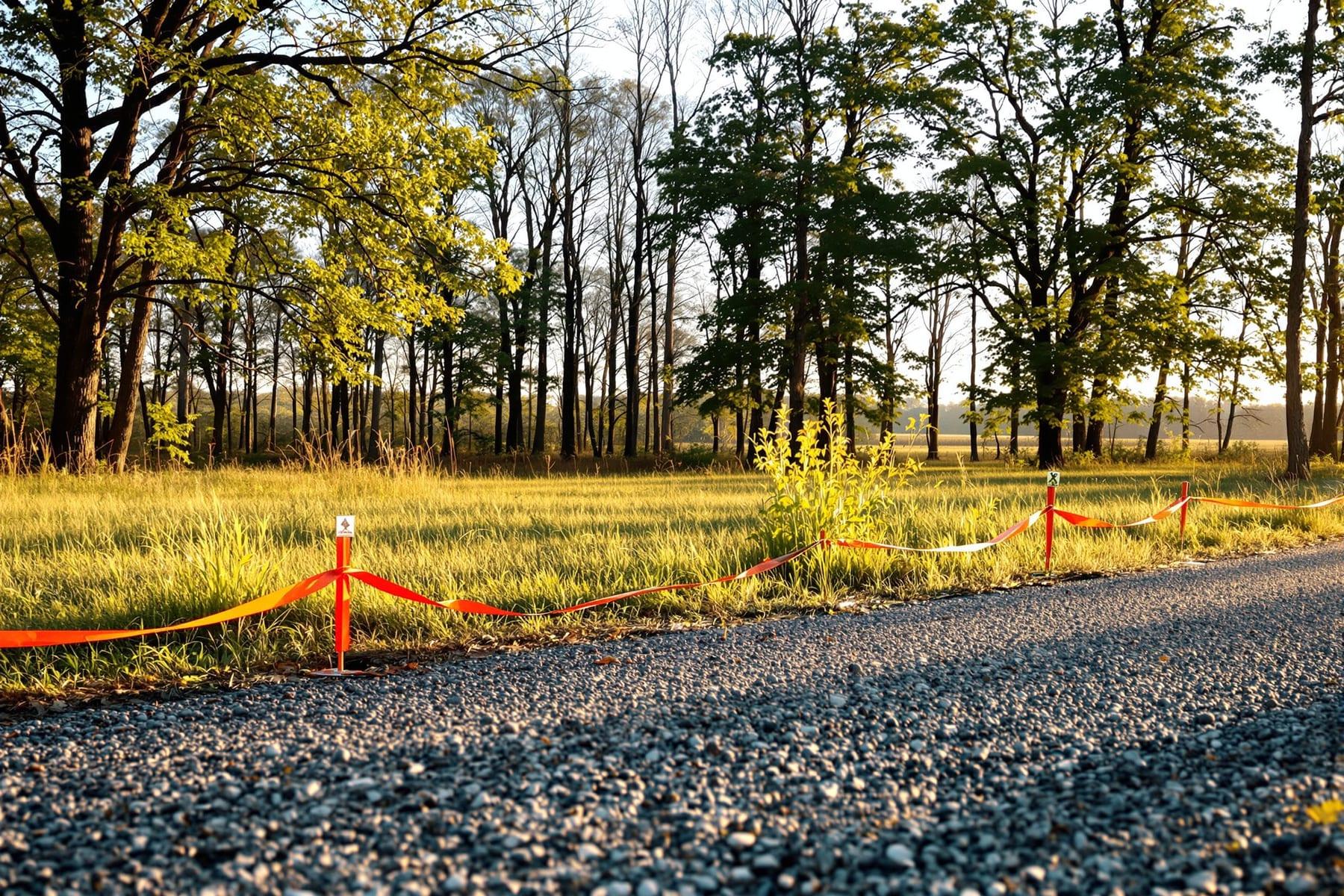
What matters as much as the price is what the lot needs. A subdivision lot usually has municipal water and sewer at the street. A rural lot in unincorporated McHenry County usually does not, which means a private well and an onsite wastewater (septic) system. The McHenry County Department of Health requires a permit for both, and a septic permit for a new home starts with a site evaluation that includes a soil boring report from a certified soil classifier. Soil results determine what type of system the lot can support, and the difference in cost between a conventional system and an engineered one is significant.
- Order the soil evaluation before you close on rural land, or make the purchase contingent on it
- Check flood plain, wetlands, and setback limits, which can shrink the buildable area of a small parcel
- Get written estimates for the driveway, tree clearing, grading, and bringing electric and gas to the house site
- Confirm whether the lot is in a municipality or unincorporated, because that decides who issues the building permit and what fees apply
Permits, impact fees, and tap-on fees
This is the line buyers most often miss. Beyond the building permit itself, many Illinois municipalities and counties charge fees on new homes to help fund schools, parks, libraries, fire protection, and roads, and municipal water and sewer connections carry their own tap-on charges. The amounts are set by local ordinance, they differ from one town to the next, and they change. Two similar homes a few miles apart, one inside Lake in the Hills and one on an unincorporated lot, can carry very different fee totals.
Because we could not verify a current, comparable fee schedule for every community, we are not printing numbers here. Ask your builder for the itemized fee estimate for your specific lot, and confirm it with the building department of the municipality, or with the county if the lot is unincorporated. A good builder contract lists these fees as their own line rather than burying them.
Timeline for building a house in McHenry County
A custom build has three phases: design and bidding, permitting, and construction. The first two often take longer than owners expect, particularly on rural lots where the health department review comes before the building permit. Once the foundation is poured, a custom home commonly takes the better part of a year, depending on size, weather, and the builder's schedule.
Winter matters here. Excavation and concrete work slow down or carry extra cost once the ground freezes, so a build that starts in spring has an easier path than one that starts in November. Material selections made late are the other common cause of delay. Decide early, and keep a contingency of cash or budget for the surprises that every build produces.
How a construction loan in Illinois works with one closing
Home State Bank offers construction-to-permanent financing with a single closing. You apply once, close once, and can lock your permanent rate before the first shovel. During the build the loan works like a line of credit: the bank releases money in draws as stages of work are completed, and you pay interest only on what has been drawn. When the occupancy certificate is issued, the loan converts to a standard mortgage without a second application or a second set of closing costs.
Each draw follows an inspection, and ours are local. Someone who knows McHenry County builders and townships visits the site and confirms the work before money moves. That protects you from paying ahead of progress, and it means a draw request or a change order is a phone call to our Crystal Lake office, not a ticket in a national queue.
To start, we need the builder's contract with a cost breakdown, plans and specifications, your lot contract or deed, the builder's license and insurance, and your normal income and asset documents. The appraisal is based on the plans and the lot, as if the home were finished. If the appraised value comes in under the total cost, the difference is generally yours to cover, which is another reason to keep finishes in line with the neighborhood.
Questions people ask
- How much does it cost to build a house in Illinois per square foot?
- NAHB's analysis of Census data puts the 2024 median for contractor-built custom homes at $186 per square foot in the East North Central division, which includes Illinois, and $166 nationally. Those figures exclude land, site work, and local fees, and Chicago-area custom bids are often higher.
- Is it cheaper to build or buy a house in McHenry County?
- Buying an existing home is often cheaper per square foot, because many older homes sell below today's construction cost. Building makes sense when you want a specific location, floor plan, or acreage that the resale market does not offer.
- How does a construction loan in Illinois work?
- With a one-close construction-to-permanent loan, you close once before the build. Funds are released in inspected draws, you pay interest only on what has been drawn, and the loan converts to a regular mortgage when the home is complete.
- Do I need a well and septic when building a house in McHenry County?
- Only where municipal water and sewer are not available, which is common on rural and unincorporated lots. The McHenry County Department of Health permits both, and a soil evaluation is required before a septic permit for a new home.
- Can I use my land as the down payment on a construction loan?
- In many cases, yes. Equity in a lot you already own can count toward the down payment. How much depends on the lot's appraised value and any loan against it.
Sources
This article is general information, not financial, tax, or legal advice, and not a commitment to lend. Program terms, limits, and rates change; confirm current figures with a loan officer. Home State Bank, N.A. NMLS 478452. Member FDIC · Equal Housing Lender.