Barndominium financing: why it is harder than a regular mortgage, and what makes one financeable
Barndominiums, post-frame homes, and shouses (a shop and a house under one roof) have moved from novelty to a real option on rural lots from Marengo to the country roads outside Appleton. The building is often the easy part. Barndominium financing is where many projects stall, because the mortgage market is built around houses that look like their neighbors. Here is why these loans are harder, and what makes one financeable.
 Home State Bank mortgage teamCrystal Lake, IL · Appleton, WI · NMLS 478452Updated September 13, 20267-minute read
Why barndominium financing is harder than a regular mortgage
Most mortgages are written to be sold to Fannie Mae or Freddie Mac or insured by a government agency. Those programs do not ban unusual homes. Fannie Mae's Selling Guide says loans on unique or nontraditional housing are eligible, provided the appraiser has adequate information to develop a reliable opinion of market value. That condition is where a barndominium loan gets difficult.
An appraiser needs comparable sales: recent, nearby sales of similar properties. In much of rural McHenry County or the Fox Valley countryside, there may be no recent sale of another post-frame home within a reasonable distance. The guide lets appraisers lean on older sales, competing neighborhoods, and other market data, but they still have to demonstrate that the property is marketable. If they cannot, the appraisal comes in low or the file stalls.
- Comparables: few or no recent sales of similar homes nearby
- Construction type: post-frame and steel buildings are unfamiliar to some underwriters and insurers
- Mixed space: a modest home attached to a shop twice its size can look more like a commercial or agricultural building than a residence
- Outbuildings and acreage: Fannie Mae asks lenders to decide whether a property with significant outbuildings is residential or agricultural in nature
What makes a barndominium or post-frame home financeable
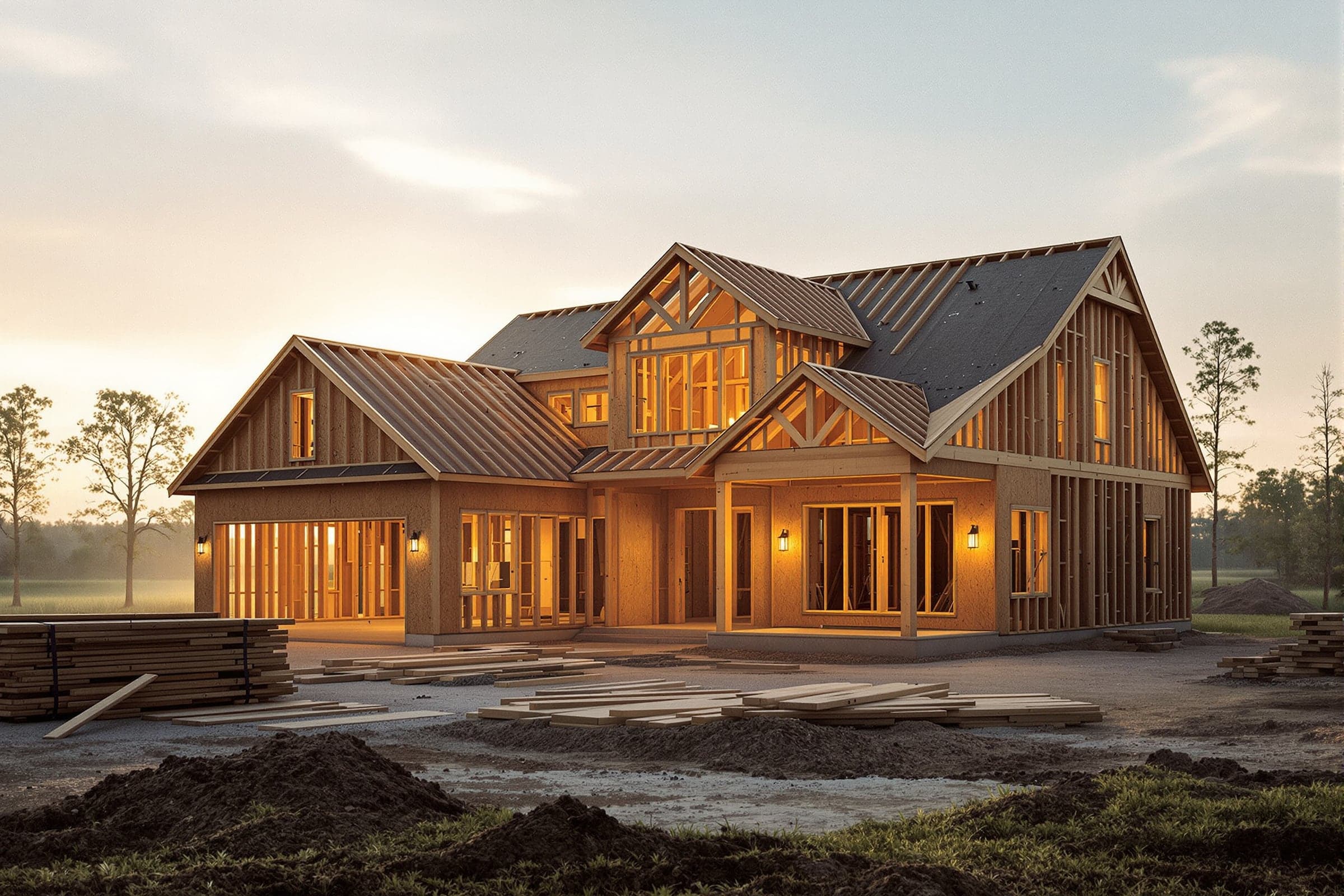
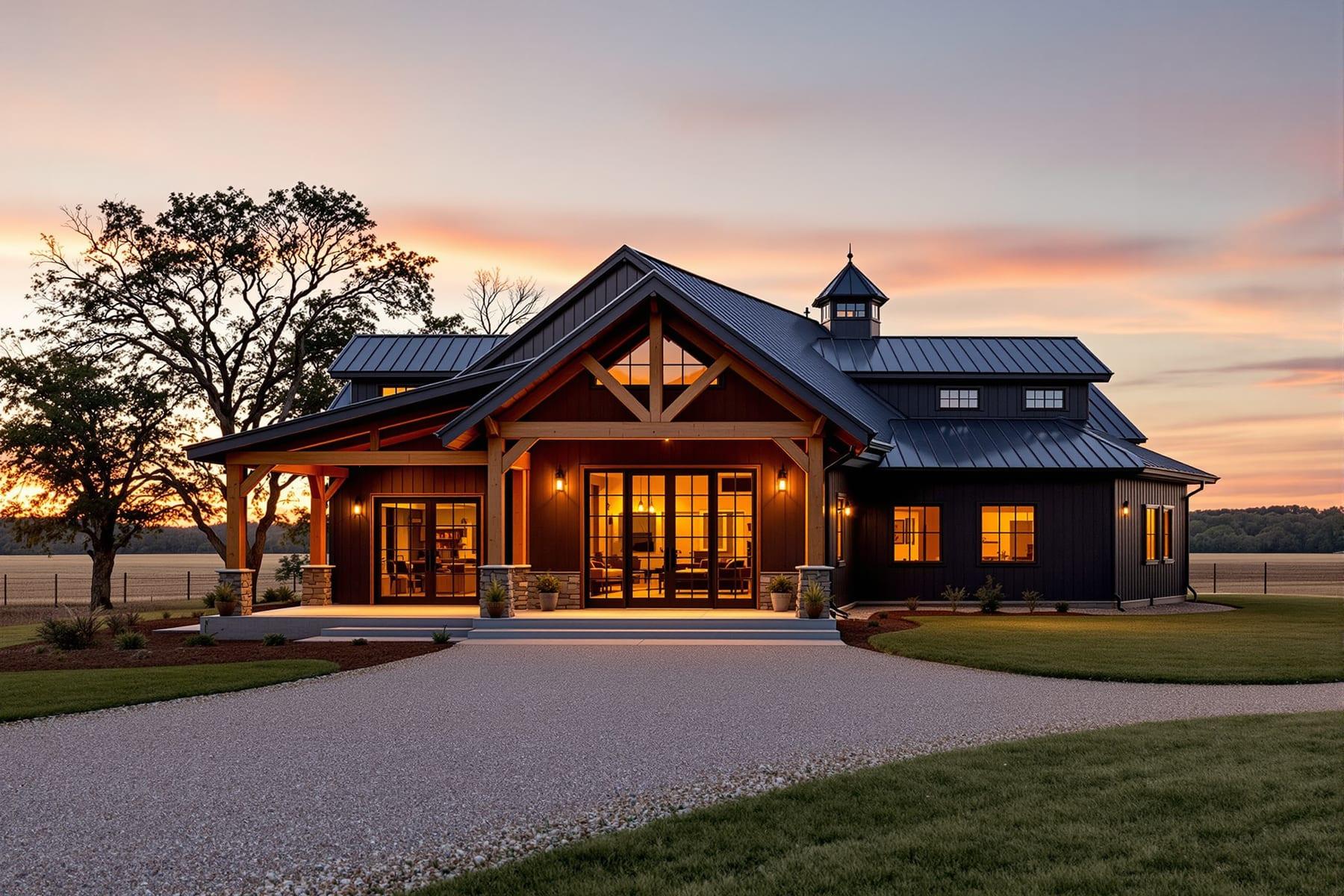
The projects that get financed look, on paper, like houses. A lender and an appraiser want to see a dwelling that happens to use post-frame or steel construction, not a pole building with a bedroom in the corner.
- A permanent foundation, engineered for a dwelling. A perimeter foundation or engineered slab is a far easier conversation than posts set in soil
- Zoning that permits a single-family dwelling, a residential building permit, and an occupancy approval at the end
- Built to the residential code. In Wisconsin that is the Uniform Dwelling Code, the statewide code for one- and two-family dwellings, enforced by certified municipal or county inspectors. In Illinois it is the code adopted by your municipality or county
- A sensible share of living area. The more of the footprint that is finished living space, as opposed to shop, the more it appraises like a home
- Residential finishes and systems: insulation and energy compliance, conventional heating and cooling, egress windows, a real kitchen and baths
- Comparable sales. Ask a local agent whether any post-frame or steel homes have sold in the area in the past couple of years. Even two or three help
Barndominium loan options compared
There is no special barndominium loan product in the agency world. You are fitting an unusual home into one of the ordinary channels, and the fit varies.
| Path | How it treats a barndominium | Practical reality |
|---|---|---|
| Conventional (Fannie Mae or Freddie Mac) | Eligible as unique housing if the appraiser can support value and marketability | Works best on a finished home in an area with comparable sales; harder for new construction in thin markets |
| FHA, VA, USDA | Must meet each agency's property standards and appraise with adequate comparables | Possible on completed homes; fewer lenders are comfortable with them |
| Construction-to-permanent with a local portfolio lender | Underwritten on plans, budget, builder, borrower strength, and an as-completed appraisal | The natural path for building one, because the lender keeps the loan and can use judgment |
| Kit or builder financing, personal loans | Often covers only the shell or kit | Usually shorter terms and higher costs; rarely covers land, site work, and interior finish together |
Why construction-to-permanent with a local portfolio lender is the natural path
A portfolio lender keeps loans on its own books, so the question is not whether the file fits an investor's checklist. The question is whether the project makes sense: the borrower, the builder, the plans, the budget, and the finished value. A local lender also knows the local market, including whether post-frame homes have sold nearby.
A construction-to-permanent loan funds the build in draws as work is completed and inspected, with interest-only payments during construction, then converts to a regular mortgage when the home is finished. If you already own the land, your equity in it can often count toward your down payment. Expect closer scrutiny, and possibly a larger down payment, than on a conventional house, because an unusual property carries more resale risk for the lender.
Home State Bank does construction-to-permanent, lot, and portfolio lending in-house. We will not promise that every barndominium can be financed. Some cannot, and we would rather tell you that at the plan stage than after you have paid for a kit. We are glad to look at your plans, your site, and your numbers and give you a straight answer.
Zoning, wells, and septic in rural Wisconsin and McHenry County
Start with zoning, before you buy the land. In unincorporated McHenry County, the county's Planning and Development department administers zoning under its Unified Development Ordinance, and building permits go through zoning, stormwater, and plan review. In Wisconsin, zoning may sit with the town, the county, or both, and shoreland rules add another layer near lakes and rivers. Ask specifically whether a dwelling with an attached shop of your planned size is permitted, and whether there are minimum dwelling sizes, exterior material rules, or limits on accessory space.
Be careful with buildings permitted as agricultural structures. An agricultural building is not a dwelling, and converting one after the fact can be expensive and hard to finance. Permit it as a residence from day one.
Most rural sites need a private well and a septic system. Both states regulate them, and permits are typically handled at the county level. A soil evaluation comes first, and a site that needs a mound or other engineered system can add meaningfully to the budget. Lenders will want the well and septic costs in the construction budget and may ask for a water test.
Insurance and barndominium cost: get real quotes early
Not every insurer writes homeowners policies on post-frame or steel homes, and those that do may treat the shop portion differently, especially if it will hold business equipment. You will need builder's risk coverage during construction and a homeowners policy at completion, and your lender will require both. Get an insurance quote at the same time you get your building bids.
On barndominium cost, be skeptical of national per-square-foot figures. They often describe a shell or a kit, not a finished home, and we have not found a reliable public source for local numbers, so we are not going to quote one. The honest budget includes land, driveway, site work, foundation, the shell, interior finish, mechanicals, well, septic, utility runs, permits, and a contingency. Finished to residential standards, a post-frame home is not automatically cheaper than a stick-built one. The number that matters is a complete, written bid from a local builder, which is also what your lender will underwrite.
Questions people ask
- Can you get a regular mortgage on a barndominium?
- Sometimes. A finished barndominium on a permanent foundation, permitted as a residence, in an area with comparable sales may qualify for conventional financing. Where comparables are thin, or when you are building new, a local portfolio lender is usually the more realistic route.
- What kind of barndominium loan do you need to build one?
- Typically a construction-to-permanent loan, which funds the build in draws and converts to a mortgage at completion. Expect to provide complete plans, a fixed-price contract, a full budget including well and septic, and a down payment that may be larger than for a conventional home.
- What is a shouse, and is it harder to finance?
- A shouse combines a shop and a house in one building. It can be harder to finance when the shop dwarfs the living space, because the property starts to look commercial or agricultural. Keeping the living area a substantial share of the building helps the appraisal.
- Is post frame home financing different from a barndominium loan?
- Not really. Lenders care less about the label than about the foundation, code compliance, zoning, living-area share, and comparable sales. A post-frame home built to the residential code on a permanent foundation is evaluated the same way.
- Do barndominiums hold their value?
- It depends on the market. Where similar homes sell regularly, they may appraise and resell well. Where they are rare, resale can take longer and appraisals tend to be more conservative, which is one reason lenders look harder at these files.
Sources
This article is general information, not financial, tax, or legal advice, and not a commitment to lend. Program terms, limits, and rates change; confirm current figures with a loan officer. Home State Bank, N.A. NMLS 478452. Member FDIC · Equal Housing Lender.